
Prince Coat vs Sherwani vs Waistcoat: A Pakistani Wedding Guide

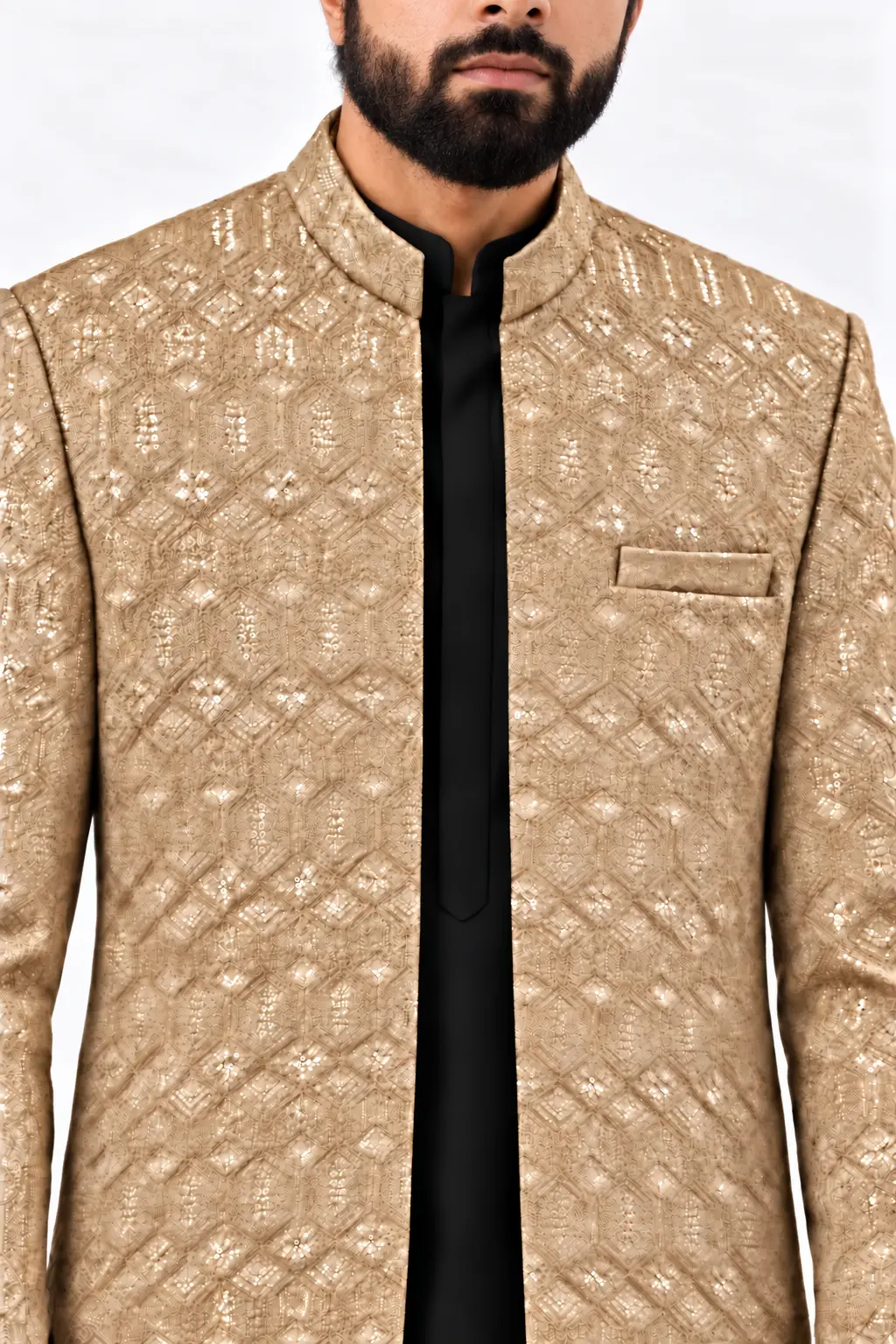
Prince coat vs sherwani: a shorter coat leaves more of the kurta visible, while a longer sherwani covers more of the outfit. Plan the kurta, bottom and footwear alongside your main garment.
For a wedding guest, start with a kurta pajama that already fits well and add a waistcoat. For a nikah or walima, an embroidered prince coat gives you a sleeved option. If you’re the groom dressing for the baraat, start with a sherwani for a longer, formal wedding look.
For a mehndi or dholki, wear the embroidery on the kurta.
For the combinations in this guide, choose one main embroidered piece and keep the other garments plain.
Prince Coat vs Sherwani: Choose the Length First
A prince coat is a shorter formal coat. A sherwani extends farther down the body. Under a prince coat, more of the kurta and bottom stays visible, so choose those pieces together with the coat.
In the product photograph, our Elephant Gold Embroidered Prince Coat is worn over a plain black outfit: gold above, black underneath. It has a band collar, geometric embroidery and sequin accents. The open front keeps the kurta in view, so keep that layer plain.
For a longer outfit, look at the Black Applique Hand-Embroidered Sherwani. The hand embroidery provides the detail, so pair it with simple footwear. Check shoulder fit and sleeve length before choosing accessories, because both affect how the garment hangs.
For a summer wedding, confirm the fabric and lining before ordering.
Finish an Existing Outfit With a Waistcoat
A waistcoat works when you already own a kurta or shalwar kameez you want to wear again. Take that actual kurta to the fitting, since the layer underneath changes how the waistcoat sits.
Our Black Suiting Waistcoat with Button Front is made from suiting fabric and sold as an individual waistcoat.
A waistcoat can look comfortable when open and pull across the chest once buttoned. Button it as you intend to wear it, then stand, sit and move your arms. If the front pulls or the armholes restrict movement, check a different size or cut.
Wear an Embroidered Kurta Without a Coat
For a mehndi, dholki or family dinner, an embroidered kurta with a pajama or shalwar makes a complete two-piece outfit. It also suits you if you’d rather avoid extra layers at a crowded function.
The Black Cotton Silk Hand-Embroidered Kurta is sold without a pajama, so include the bottom when planning your order.
If you plan to wear a coat over it at another function, try the two garments together and check the collar and sleeves. Browse our men’s kurta collection for other fabrics and designs.
Check What the Price Includes
Each of the four featured products is sold as the garment named in its listing. Additional clothing, footwear and accessories shown in the photographs are not included.
Other listings come as sets. Our waistcoat collection also has three-piece outfits containing a kameez, shalwar and waistcoat, so compare what’s included before comparing prices.
For a fitting enquiry, send chest, shoulder, sleeve and garment-length measurements. If you measured a garment that already fits, say so. For the chest, state whether your figure is the full circumference or the width across the garment laid flat.
Plan Around the Wedding Date
Send your function date and delivery destination with your first message to Kurta Place, Tariq Road, Karachi. Before ordering, confirm the customization time and estimated delivery.
For international enquiries from the UK, USA or UAE, confirm delivery availability and shipping charges for your destination.
Aim to have the outfit in your hands at least a week before the function. That leaves time to try it with the clothes and footwear you’ll actually wear and have any necessary alterations made.